

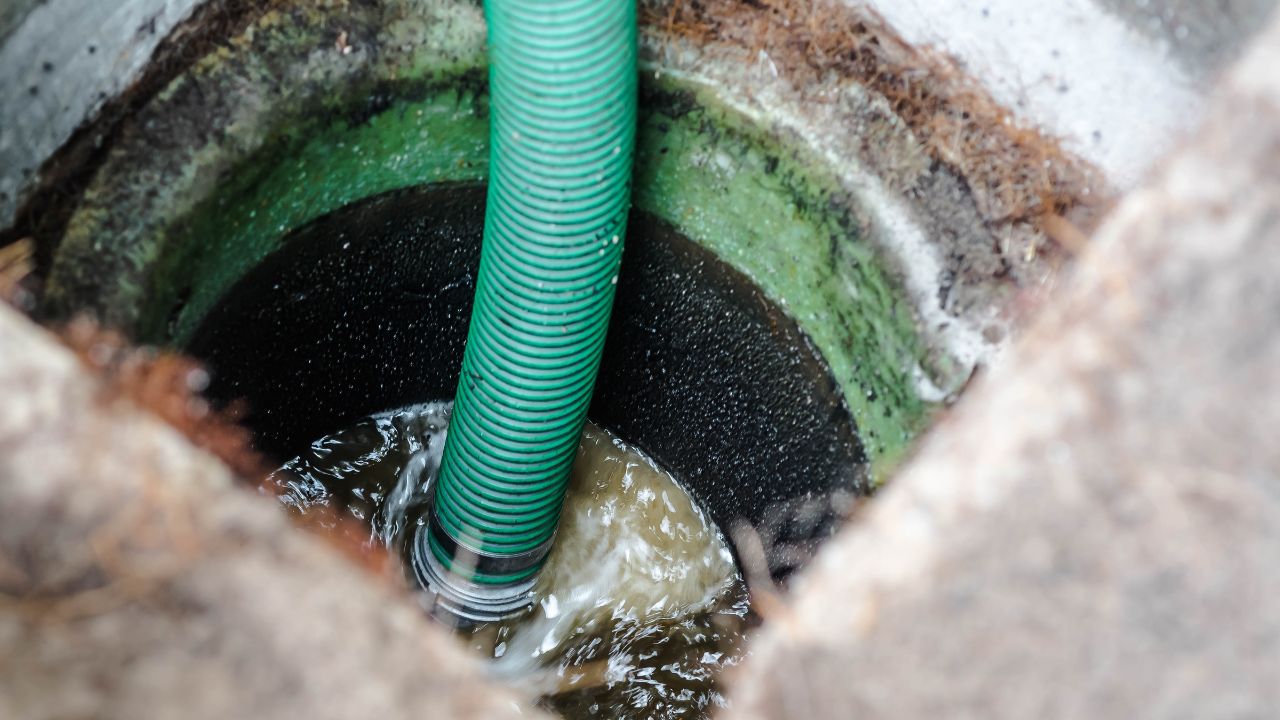
Septic tank pumping frequency depends on household size, tank capacity, and daily water usage patterns. Most systems require pumping every 3-5 years, but occupied homes with smaller tanks need more frequent service. Understanding your specific septic tank pumping frequency prevents backups, protects groundwater, and extends system lifespan. Proper maintenance schedules save thousands in repair costs while ensuring regulatory compliance.
Key Takeaways
A septic tank collects and treats household wastewater through bacterial decomposition and gravity-based separation. Solids settle to the bottom as sludge while lighter materials float as scum. The middle layer of clarified liquid flows into the drainfield for soil filtration. Bacteria inside the tank break down organic matter continuously.
Traditional septic tanks consist of a septic tank and a drainfield that disperses treated wastewater. Advanced Onsite Wastewater Treatment Systems incorporate additional treatment components like sand filters or aerobic units. Cluster systems serve multiple homes by pooling wastewater for centralized treatment before dispersal. Aerobic septic systems introduce oxygen to promote bacterial growth for more effective wastewater treatment.
Approximately 95.1% of U.S. septic households use a standard tank with a subsurface leach field. Advanced systems achieve 50%-80% removal of harmful wastewater components through enhanced treatment processes. Cluster systems reach 80%-95% removal efficiency with yearly inspections and centralized monitoring. The aerobic septic system market is growing at 7.93% annually from 2025 to 2034.
Plastic tanks constituted the largest material segment globally in 2024 due to installation advantages. Concrete tanks held the largest U.S. material share in 2023 and remain popular for durability. Concrete tanks are heavy and require specialized equipment for installation and positioning. Plastic tanks are lighter and easier to transport, reducing installation time and labor costs.
Fiberglass tanks are lightweight and resistant to corrosion, offering long-term performance benefits. Each material type provides distinct advantages depending on soil conditions and site accessibility. Homeowners selecting tank materials should consider local regulations and understanding the importance of regular septic inspections for compliance verification. Material choice affects installation complexity but not fundamental maintenance requirements.
Regular pumping removes accumulated solids that reduce tank capacity and treatment effectiveness. Neglected systems overflow into drainfields, causing expensive soil saturation and system failure. Routine maintenance prevents groundwater contamination and protects public health and local ecosystems. Pumping every 3-5 years costs $250-$500 compared to $5,000-$15,000 for system replacement.
Neglected systems can lead to groundwater contamination through untreated wastewater seepage into aquifers. System failures release pathogens and nutrients that endanger drinking water sources and surface waters. Untreated wastewater poses risks to drinking water sources, recreational waters, and shellfish beds. Properties with partial maintenance had approximately 30% higher total coliform than properly maintained systems.
Irregularly maintained systems nearly doubled coliform levels compared to systems on consistent pump schedules. Bacterial contamination from failing septic systems creates serious public health hazards for surrounding properties. Environmental regulations increasingly require documented maintenance to prevent the cost of delaying septic maintenance from affecting entire communities. Consistent pumping protects both individual properties and regional water quality standards.
Larger households generate more wastewater volume, reducing the time between required pumping services. Each additional person contributes approximately 70 gallons of daily wastewater to the septic system. Increased occupancy accelerates sludge accumulation and fills available tank capacity more rapidly. Household size directly determines optimal pump schedule intervals for maintaining system functionality.
Household size determines wastewater volume, which directly controls how quickly sludge accumulates in tanks. More occupants produce more solid waste that settles and reduces effective tank capacity. A 1,000-gallon tank serving one person needs pumping every 12.4 years under normal conditions. The same tank serving four residents requires pumping every 2.6 years due to accelerated buildup.
A 1,000-gallon tank with 1 resident needs pumping every 12.4 years under standard usage. That same tank with 4 residents needs pumping every 2.6 years due to increased solids. A 1,500-gallon tank with 3 residents needs pumping every 5.9 years for optimal performance. A 2,000-gallon tank with 2 residents needs pumping every 12.4 years with normal water usage.
A 2,000-gallon tank with 6 residents needs pumping every 3.7 years to prevent system overload. Larger tanks provide longer intervals between services but still require monitoring based on occupancy. Professional septic tank pumping services measure sludge depth to determine actual pumping needs accurately. These intervals serve as guidelines, with actual timing adjusted for individual water consumption patterns.
| Tank Size | Household Size | Recommended Pumping Frequency |
| 1,000 gallons | 1 resident | Every 12.4 years |
| 1,000 gallons | 4 residents | Every 2.6 years |
| 1,500 gallons | 3 residents | Every 5.9 years |
| 2,000 gallons | 2 residents | Every 12.4 years |
| 2,000 gallons | 6 residents | Every 3.7 years |
Table 1: Estimated pumping intervals by tank size and household size, based on standard usage patterns.
High water consumption reduces the settling time available for solid waste separation inside tanks. Excessive water flow pushes solids into the drainfield before bacteria complete decomposition processes. Use of garbage disposals necessitates more frequent pumping due to increased organic solid input. Efficient fixtures and conservation practices extend the time between required pumping services.
Washing machines, dishwashers, and long showers all contribute to the daily wastewater volume entering the system. How water usage affects your septic system determines whether you need earlier intervention than standard schedules suggest. Monitoring household water habits helps predict when your system will reach capacity. Reducing unnecessary water waste preserves tank capacity and extends functional lifespan.
Professional inspections identify problems before they cause system failures or property damage. EPA recommends septic system inspection every 1-3 years, depending on system type and usage. EPA recommends pumping every 3-5 years based on tank size, population, water use, and solids. Regular inspections verify that all components function properly and meet current environmental standards.
The EPA recommends inspection every 1-3 years to catch developing issues before costly failures. Pumping should occur every 3-5 years depending on tank size, household population, and water consumption. In Pennsylvania, 77% of respondents pumped every 1-5 years following recommended maintenance intervals. Only 32% reported inspections every 1-5 years, while 29% had never inspected their systems.
These statistics reveal significant gaps in homeowner awareness about proper maintenance requirements and schedules. Avoiding the biggest septic mistakes homeowners make requires following manufacturer and regulatory guidelines consistently. Documentation of inspections and pumping services proves compliance during property sales. Consistent maintenance prevents emergency situations that require expensive immediate intervention.
Smart monitoring systems integrate sensors for real-time monitoring of septic system performance and capacity. These systems track sludge accumulation and alert homeowners when pumping becomes necessary. Deployments of smart sensor-enabled aerobic septic systems increased by 29% in recent years. Almost 70% of homeowners prioritize knowing when to inspect or pump their systems.
Technology eliminates guesswork by providing data-driven notifications based on actual tank conditions. Smart systems prevent premature pumping while ensuring service occurs before problems develop. Real-time monitoring optimizes maintenance timing and reduces unnecessary service calls. Advanced sensors represent a growing trend in preventative septic system management.
System type determines treatment capacity and solids handling, which influence required maintenance intervals. Traditional systems rely on basic settling and bacterial action with standard pumping schedules. Advanced systems incorporate enhanced treatment that may reduce or modify pumping frequency requirements. Understanding how often should a septic system be pumped depends on distinguishing between conventional and advanced technologies.
Traditional systems require pumping every 3-5 years based on household size and tank capacity. Advanced systems achieve 50%-80% removal of harmful wastewater components through additional treatment stages. Routine maintenance costs $250-$500 every three to five years for conventional septic systems. Repair or replacement of malfunctioning conventional systems costs $5,000-$15,000 when preventative maintenance is neglected.
Advanced systems may require more frequent professional inspections despite enhanced treatment capabilities. These systems often include electrical components and specialized media requiring expert servicing. Enhanced treatment reduces environmental impact but doesn’t eliminate the need for regular pumping services. Proper maintenance of either system type prevents catastrophic failures and protects property values.
Cluster systems achieve 80%-95% removal of harmful wastewater components through centralized treatment processes. These systems serve multiple homes, offering economies of scale in treatment and monitoring. Modular aerobic systems offer flexibility and easier installation compared to traditional concrete installations. The aerobic septic system market is growing at a 7.93% CAGR from 2025 to 2034.
North America accounts for 49% of global aerobic system installations due to regulatory requirements. Modular aerobic system adoption increased by 33% as homeowners seek improved treatment performance. Aerobic systems require more frequent professional attention but deliver superior wastewater treatment results. These advanced options suit environmentally sensitive areas where traditional systems face restrictions.
| System Type | Treatment Efficiency | Maintenance Notes |
| Traditional tank and drainfield | Standard settling and bacterial treatment | Pumping every 3-5 years based on size and household |
| Advanced onsite treatment | 50%-80% removal of harmful components | May need more frequent inspections due to added parts |
| Cluster system | 80%-95% removal of harmful components | Serves multiple homes with centralized monitoring |
| Aerobic system | Enhanced oxygen-based treatment | Requires more frequent professional attention |
Table 2: Comparison of septic system types by treatment efficiency and maintenance needs.
Cost concerns and awareness gaps significantly affect whether homeowners follow recommended maintenance schedules. Many property owners lack basic information about their septic system capacity and requirements. Understanding proper maintenance routines requires education about system function and regulatory compliance standards. Financial planning for routine service prevents deferred maintenance that leads to expensive emergency repairs.
Approximately 40% of Pennsylvania septic users did not know their tank size or capacity. About 33% cited routine maintenance costs as a challenge to following recommended service schedules. Only 35% strongly agreed that they budgeted for septic expenditures in their household planning. These awareness and financial barriers contribute to irregular maintenance and increased system failure rates.
In Pennsylvania, 87% of respondents paid $0-$500 for pumping services when they maintained systems. However, 6% had never pumped their tank despite owning septic-dependent properties for years. Cost concerns often lead homeowners to delay necessary service until visible problems force action. Following a seasonal septic system maintenance checklist helps budget for predictable expenses rather than emergency repairs.
Finding trustworthy professionals ranks as a priority for 38% of septic system owners. The U.S. septic services industry generated $8.7 billion in revenue in 2026 across all services. Reliable providers offer regular scheduling, accurate assessments, and transparent pricing for maintenance services. Professional technicians educate homeowners about their specific system requirements and optimal maintenance timing.
Certified service providers use advanced equipment to measure sludge depth and assess actual pumping needs. Expert septic system maintenance tips from qualified professionals prevent unnecessary service while ensuring adequate system care. Establishing relationships with local experts creates accountability and consistent service quality. Professional guidance helps homeowners navigate technical requirements and regulatory compliance obligations.
Geographic and demographic factors determine septic system prevalence and maintenance patterns across different regions. Urban areas typically connect to municipal sewers while rural properties rely on decentralized treatment. Regional soil conditions, water table depth, and local regulations all influence system design requirements. Population density and infrastructure development affect whether communities invest in centralized or individual treatment.
About 83% of U.S. households were connected to public sewers in 2021 for wastewater treatment. Approximately 16% relied on standard septic tanks for decentralized wastewater management in 2021. The Pacific division showed 91.3% sewer connectivity, indicating minimal septic system dependence. The Mountain division demonstrated 87.6% sewer connectivity with moderate septic system prevalence.
New England reported 72.9% sewer connectivity, suggesting higher septic system reliance than in western regions. Regional infrastructure development and population density determine available wastewater treatment options for residents. Rural and suburban areas without centralized sewer access depend entirely on properly maintained septic systems. These geographic patterns influence local service provider availability and regulatory enforcement approaches.
Approximately 21.718 million U.S. households utilized a septic tank or cesspool in 2017. About 52% of septic households had an income of $61,000 or less in 2017. One-person households were 4.2 percentage points more sewer-connected than the national average. Two-person households were 3.6 percentage points less sewer-connected than typical households.
Income level correlates with property location and available infrastructure rather than system quality. Smaller households show different connectivity patterns despite similar income levels across demographic groups. Septic system reliance spans all income brackets, challenging assumptions about economic determinants. Household composition affects wastewater volume regardless of connection type or infrastructure availability.
Maintaining proper septic tank pumping frequency protects property values and prevents environmental contamination. Household size remains the primary factor determining optimal service intervals for any system type. Regular professional inspections identify developing issues before they escalate into costly emergency repairs. Understanding your specific system requirements enables proactive maintenance rather than reactive crisis management.
Smart monitoring technology and professional guidance help homeowners optimize pump schedules based on actual conditions. Following EPA recommendations and local regulations ensures compliance while protecting groundwater and surface water quality. Investment in routine maintenance costs significantly less than repairing or replacing failed systems. Proper septic care demonstrates environmental responsibility and protects community health and property investments.
Black Water Septic Pros has served Southwest Ohio for nearly 30 years with licensed, certified technicians. Our team uses advanced diagnostic equipment and modern vacuum trucks for comprehensive septic system care. We provide educational guidance without pressure tactics, helping homeowners understand their maintenance needs clearly. Preventative care delivers long-term peace of mind and protects your most valuable asset.
Waiting too long between pumping services raises the risk of backups, drainfield damage, and repair bills that run into the thousands. Black Water Septic Pros has served Hamilton and the surrounding Southwest Ohio communities for nearly 30 years, and our licensed, certified technicians use modern vacuum trucks and diagnostic tools to match your service schedule to your household size and tank capacity.
Ready to get on the calendar? Request an appointment with Black Water Septic Pros or call (513) 623-1792 to speak with our team. We’re available 7 days a week and provide honest recommendations with no pressure tactics, so you know exactly what your system needs before we start any work.
A. Most households need septic tank pumping every 3 to 5 years, though the right interval depends on tank size, household size, and daily water use. A larger household or a smaller tank shortens that window, sometimes to every 2 to 3 years. Black Water Septic Pros measures actual sludge depth during service calls to confirm the schedule that fits your specific system, rather than relying on a one-size-fits-all timeline.
A. Delayed pumping lets solids build up until they overflow into the drainfield, which can clog the soil and cause slow drains, backups, or standing water in the yard. Once a drainfield is saturated with solids, repair costs can climb from a few hundred dollars for routine pumping to $5,000-$15,000 for a system replacement. Scheduling pumping on time protects both your property and local groundwater quality.
A. Lower water use slows sludge accumulation, but it does not fully offset the added waste volume from more residents. Each additional person contributes roughly 70 gallons of daily wastewater, which still shortens the time before a tank reaches capacity. Water-efficient fixtures and spacing out laundry loads help, but larger households should still expect shorter intervals than single-occupant homes.
A. Advanced and aerobic systems still require regular pumping, even though their added treatment stages remove more contaminants before discharge. These systems often include electrical components and specialized media, so they may need more frequent professional inspections in addition to standard pumping. Traditional systems typically follow the standard 3-to-5-year pumping window based on tank size and household use.
A. Slow drains, gurgling pipes, sewage odors near the tank or drainfield, and standing water in the yard are common signs that a tank is due for service. If it has been more than 5 years since your last pumping, or you cannot recall the last service date, it is worth scheduling an inspection. A technician can measure sludge depth directly and tell you whether pumping is needed now or can wait.