

Residential wastewater management directly impacts property maintenance costs and resale value. Understanding the septic vs sewer distinction helps homeowners budget for long-term expenses and comply with local environmental regulations.
The infrastructure serving your property determines who manages waste treatment and who pays for system repairs. Septic systems place responsibility on individual homeowners while municipal sewers transfer oversight to utility operators.
Key Takeaways
Wastewater systems fall into two categories based on treatment location and management structure. Municipal sewers transport waste to centralized facilities while septic systems treat effluent on individual properties.
Both approaches convert household waste into environmentally safe outputs through biological processes. The primary difference lies in whether treatment occurs at a community plant or beneath your yard.
Municipal sewer systems use gravity-fed or pressurized main lines transporting waste to a centralized treatment plant. Underground pipes collect effluent from residential connections and deliver it to regional processing facilities.
Treatment plants remove solids and neutralize pathogens before releasing water into rivers or oceans. Utility companies manage all maintenance activities and charge monthly fees for service access.
Conventional septic systems use a septic tank for solids separation, followed by a soil-based drainfield for biological treatment. Wastewater enters an underground tank where heavy solids settle, and lighter materials float.
Partially treated liquid flows into perforated pipes distributed across a drainfield absorption area. Beneficial bacteria in the soil complete the treatment process before water reenters the groundwater table.
Advanced treatment units use aeration or specialized media like sand and peat to treat waste to a higher standard than conventional soil. These systems inject oxygen into effluent to accelerate bacterial decomposition and reduce nitrogen levels.
Septic Tank Effluent Pumping systems have individual tanks that provide primary treatment before effluent is pumped to a shared neighborhood treatment facility. STEP technology allows development in areas where gravity-fed sewers prove impractical due to topography.
System identification begins with checking your property assessment records and monthly utility bills. Municipal sewer users receive regular invoices from water departments while septic homeowners see no wastewater charges.
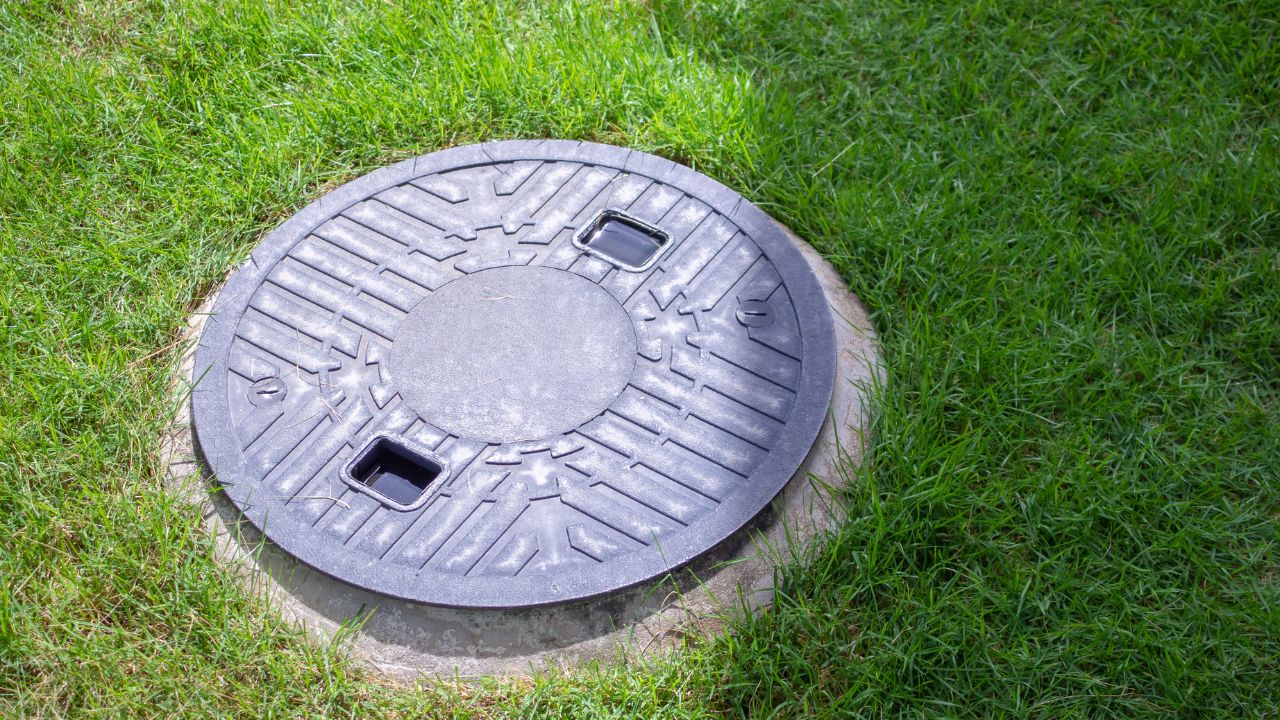
Visual inspection of your yard reveals physical clues about your drainage system’s infrastructure. Septic properties contain buried tanks and drainfield areas that restrict landscaping and vehicle traffic.
83% of U.S. households were connected to public sewers in 2021, according to national housing surveys. 16% of U.S. households utilize individual septic systems during the same reporting period.
49% of new homes in New England use septic systems, reflecting rural development patterns. 93% of new homes in the Pacific region are connected to sewers due to higher urban density.
Central cities maintain greater than 97% sewer connectivity due to established infrastructure networks. Rural areas rely on septic systems for approximately 50% of households where extending municipal lines proves cost-prohibitive.
Sewer connectivity decreases with the age of the householder as older residents occupy established rural properties. Higher-income households are less likely to be connected to sewers nationally because they purchase larger lots beyond urban service boundaries.
Municipal sewer customers find monthly wastewater line items on combined water and sewer bills. Septic homeowners schedule periodic pumping appointments and maintain their own treatment infrastructure.
Property deeds and county health department records document septic system installation dates and inspection histories. Real estate disclosure forms require sellers to identify the wastewater system type before closing transactions.
Ownership responsibility represents the fundamental distinction between centralized and decentralized wastewater treatment approaches. Sewer users pay utilities for ongoing service while septic owners finance their own maintenance.
Control over home plumbing outcomes varies significantly between the two infrastructure types. Municipal systems limit homeowner decision-making authority while septic installations allow complete management autonomy.
Municipal sewer systems have low homeowner maintenance compared to septic requiring periodic maintenance interventions. Professional utility crews repair main line breaks and upgrade treatment plant equipment using collective rate revenue.
Septic pumping is required every 3-5 years to remove accumulated solids before they clog drainfield pipes. Conventional septic has risk of failure if neglected because biological processes depend on proper tank volume management.
Municipal sewers have the potential for large-scale overflows during heavy rainfall events when treatment capacity is exceeded. Combined sewer systems discharge untreated waste directly into waterways when infrastructure becomes overwhelmed.
Properly maintained septic systems recharge local groundwater and filter nutrients through natural soil processes. Failed septic installations contaminate nearby wells and contribute nitrogen pollution to sensitive coastal ecosystems.
Monthly sewer bills range from $22 to $123 depending on the municipal service area and usage volume. Rising utility rates for sewers climb at 4.6% annually, reflecting aging infrastructure replacement needs.
Regular maintenance costs $250 to $500 every 3-5 years, representing a bargain compared to replacement expenses. Failed conventional system replacement costs $5,000 to $15,000 when drainfields collapse or tanks crack.
Property constraints sometimes prevent installation of conventional septic systems or connection to municipal sewers. Challenging soil conditions, limited lot sizes, and environmental protection zones necessitate specialized treatment technologies.
Hybrid approaches combine individual treatment units with shared collection infrastructure for clustered developments. These intermediate solutions balance homeowner autonomy with regulatory compliance on difficult sites.
ATUs have a smaller footprint than conventional septic systems, allowing installation on compact lots. Mechanical aeration components speed decomposition and produce cleaner effluent meeting stricter discharge standards.
ATUs require electricity to power air pumps and control panels monitoring treatment performance. ATUs require annual service contracts with certified technicians who inspect components and replace consumable parts.
STEP systems pump pre-treated effluent from individual tanks to centralized neighborhood treatment facilities. Shared infrastructure reduces individual property footprint requirements while maintaining decentralized primary treatment.
Cluster systems serve multiple homes through small community treatment plants managed by homeowner associations. This approach provides municipal-scale treatment efficiency for developments beyond sewer service areas.
Conventional septic has soil suitability requirements that eliminate options for properties with high water tables. Advanced treatment technologies overcome geological limitations by treating waste before soil contact.
Coastal properties near sensitive marine environments benefit from nitrogen-reducing ATUs protecting water quality. Steep hillside lots use STEP systems to overcome gravity limitations preventing conventional drainfield installation.
Upfront installation expenses vary significantly based on system complexity and site preparation needs. Long-term operational costs depend on maintenance frequency and utility rate structures beyond homeowner control.
Total ownership calculations must account for both capital expenditures and recurring service expenses over decades. Accurate cost comparisons require evaluating multiple scenarios across typical homeownership timelines.
Conventional Septic Install costs $3,000 to $15,000, depending on tank size and drainfield design. Excavation requirements and soil conditions drive the final price within this range.
Advanced/Aerobic installation costs $10,000 to $25,000, reflecting additional mechanical components and electrical work. Sewer Connection costs $2,500 to $12,000, including tap fees and lateral pipe installation.
| System Type | Typical Installation Cost | What Drives the Price |
| Conventional septic | $3,000 – $15,000 | Tank size and drainfield design |
| Advanced or aerobic septic | $10,000 – $25,000 | Mechanical components and electrical work |
| Sewer connection | $2,500 – $12,000 | Tap fees and lateral pipe installation |
Septic Pumping costs $250 to $500 for standard residential tanks during routine service visits. Annual Septic Maintenance for ATU costs $300 to $1,500, covering inspections, filter replacements, and performance testing.
Monthly sewer bills range from $22 to $123, compounding into substantial long-term expenses. Conventional septic has a lower long-term cost if maintained, versus sewer monthly utility bills accumulating over decades.
| Expense | Typical Cost | Frequency |
| Septic pumping | $250 – $500 | Every 3–5 years |
| ATU annual maintenance | $300 – $1,500 | Yearly service contract |
| Municipal sewer bill | $22 – $123 | Monthly |
Municipal sewer connection increases property resale speed by 10-18% in markets where buyers prefer maintenance-free infrastructure. Sewer access signals urban amenity availability and reduces buyer concerns about repair liabilities.
Septic systems appeal to cost-conscious buyers willing to perform scheduled maintenance for lower monthly expenses. Rural property purchasers often view septic independence as an asset rather than a limitation.
Location constraints often eliminate choice between wastewater system types for specific properties. Available municipal infrastructure and lot characteristics predetermine which options remain feasible.
Personal preferences influence decisions when both systems remain viable installation options. Homeowner priorities regarding control, cost predictability, and maintenance responsibility shape final selections.
Sewer systems lack homeowner control over rate increases and service quality. Utility companies set fees and maintenance schedules without direct customer input.
Municipal connections eliminate individual failure risks by transferring treatment responsibility to professional operators. Homeowners gain freedom from pumping schedules and drainfield monitoring obligations.
Septic users maintain complete authority over maintenance timing and service provider selection. Owner-managed systems allow cost control through diligent care and competitive contractor bidding.
Independence from utility rate inflation protects long-term household budgets from external cost pressures. Septic homeowners accept hands-on management responsibilities in exchange for operational autonomy.
84% of new single-family homes will be connected to public sewers in 2024, reflecting suburban growth patterns. 16% of new single-family homes used individual septic systems during the same construction period.
91% of homes built for sale will be connected to public sewers in 2025 as developers prioritize standardized infrastructure. Builders install sewers in subdivisions to accelerate sales and reduce buyer concerns.
Technological innovation and environmental regulations drive evolution in residential wastewater treatment approaches. Market growth reflects both population expansion and increasing adoption of advanced treatment methods.
Regulatory pressure to protect water quality accelerates the transition from conventional septic systems toward advanced monitoring systems. Environmental concerns and smart technology integration reshape homeowner expectations for decentralized treatment.
U.S. Septic Tank Product Market valued at $1.06 Billion in 2024, serving replacement and new installation demand. U.S. Septic Tank Product Market projected to reach $1.39 billion by 2032, reflecting steady growth.
U.S. Septic Tank Product Market CAGR of 3.5% aligns with population growth in unserved areas. Global Alternative Septic Systems are valued at $1.55 billion in 2024, representing advanced treatment adoption.
New England maintains the highest septic reliance at 49% due to dispersed development patterns and abundant land. Pacific region achieves 93% sewer connectivity through concentrated urban growth and infrastructure investment.
South region has exceeded 20% septic adoption in recent years as suburban expansion outpaces sewer extension. Developer decisions favor sewers in high-density subdivisions but accept septic for rural estate lots.
Alternative/Advanced Onsite Treatment segment projected to grow nearly three times as fast as traditional septic tank market. Global Alternative Septic Systems CAGR of 10.6% reflects regulatory mandates for nitrogen reduction.
Global Alternative Septic Systems are projected to reach $4.62 billion by 2035, driven by coastal protection requirements. Stricter discharge standards force property assessment reviews and system upgrades in sensitive watersheds.
System selection depends on property location, soil characteristics, and individual preferences regarding maintenance responsibility. Municipal sewers offer convenience at the cost of ongoing utility bills while septic systems provide independence through active management.
Advanced treatment technologies expand development possibilities on challenging lots where conventional options fail. The wastewater infrastructure landscape continues evolving as environmental standards tighten and smart monitoring becomes standard practice.
Homeowners benefit from understanding these differences when purchasing property or planning system upgrades. Whether managing an existing system or evaluating options for new construction, informed decisions protect both property value and local water quality.
Black Water Septic Pros serves Southwest Ohio homeowners with nearly 30 years of licensed expertise in septic system care. Professional maintenance prevents costly failures and extends system lifespan through proper management.
Knowing whether your home runs on septic or sewer is only the first step. If you own a septic system, routine pumping and honest inspections keep small issues from turning into costly repairs. Our licensed technicians have spent nearly 30 years serving Hamilton and the surrounding Southwest Ohio communities, so you get straight answers and dependable work every time.
Request an appointment with Black Water Septic Pros or call (513) 623-1792 to speak with our team. We’re available seven days a week and ready to help you keep your system running smoothly.
A. Check your property assessment records or a recent water bill first. A monthly wastewater charge points to a municipal sewer connection, while no such charge usually means a septic system. A walk around the yard can confirm it, since septic properties have a buried tank and drainfield area that limit landscaping and heavy vehicle traffic.
A. Most residential septic tanks need pumping every 3 to 5 years, depending on tank size and household water use. Waiting too long lets solids build up and clog the drainfield, which raises the risk of backups. A licensed technician can confirm the right schedule for your specific tank and usage.
A. Septic systems often cost less over time if they’re maintained properly, since pumping runs $250 to $500 every few years rather than a monthly bill. Sewer service trades that lower long-term cost for convenience, with monthly bills between $22 and $123 and no direct maintenance responsibility. The better financial choice depends on how long you plan to own the home and how consistently maintenance gets done.
A. Skipping pumping and inspections lets solid waste accumulate until it clogs the drainfield, which can lead to backups, foul odors, and standing water in the yard. Left unaddressed, a neglected system can fail completely, and replacement runs $5,000 to $15,000. Scheduled service catches these problems early and protects both your property and your budget.
A. In many cases, yes, if a sewer main runs near your property and local regulations allow the connection. The process involves tap fees, lateral pipe installation, and coordination with your local utility, which typically runs $2,500 to $12,000 depending on distance and site conditions. A licensed septic and wastewater professional can walk you through whether a switch makes sense for your property.