

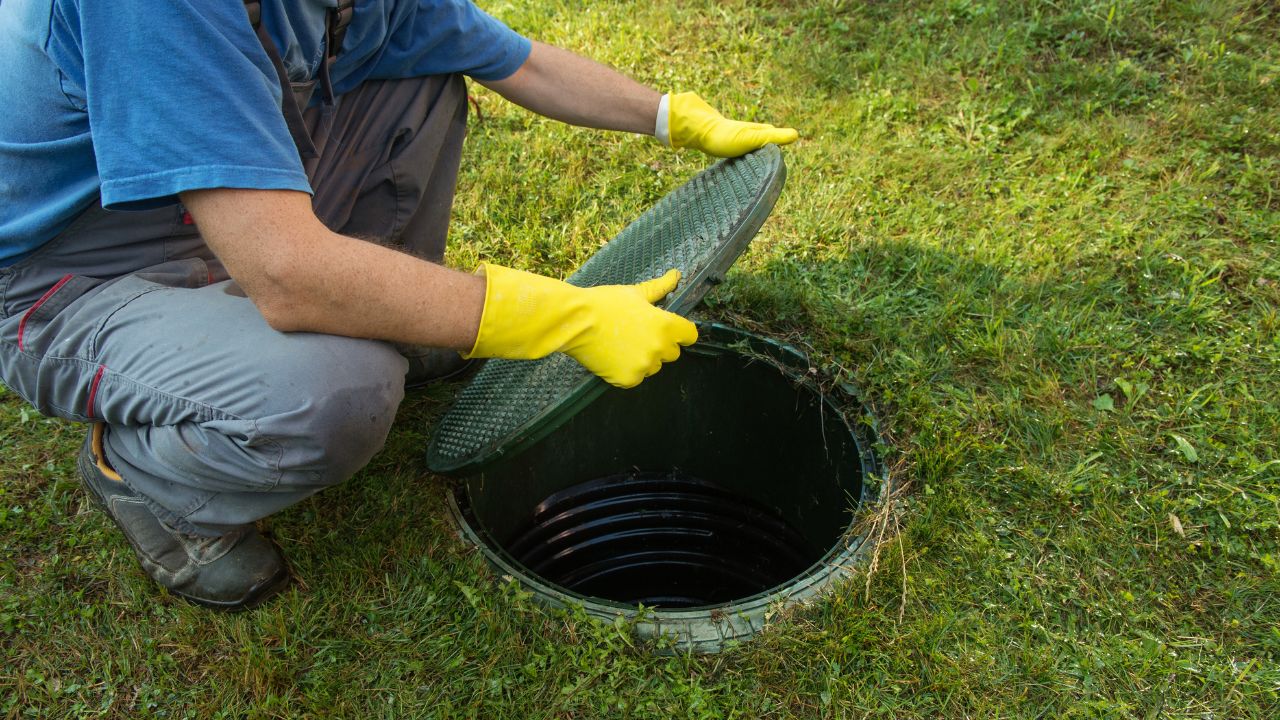
Septic capacity determines how much wastewater your system can safely process without backup or failure. Household water usage directly impacts whether your tank operates efficiently or becomes overwhelmed, leading to costly repairs and environmental hazards.
Proper water handling within system limits extends tank life and protects groundwater quality. Understanding your tank’s capacity and matching it to household demand prevents overloading, reduces pumping frequency, and maintains compliance with local health codes.
Key Takeaways
A septic tank is a buried watertight container that treats household wastewater through bacterial decomposition and settling. Solids sink to the bottom, oils float to the top, and partially treated water flows to the drainfield for soil filtration.
The system relies on bacteria to break down organic matter while separating waste into three layers. Proper functioning requires balanced bacterial activity, adequate retention time, and a properly sized tank matching daily water usage patterns.
Traditional septic tanks consist of a septic tank and a drainfield (leach field). Advanced Onsite Wastewater Treatment Systems (OWTS) incorporate additional treatment components beyond a conventional septic tank, such as sand filters, aerobic units, or disinfection.
Cluster/Community systems serve multiple homes, pooling wastewater for centralized treatment before dispersal. Aerobic septic systems introduce oxygen to promote bacterial growth, while 95.1% of U.S. septic households use a standard tank with a subsurface leach field.
Concrete, plastic, and fiberglass are the primary septic tank construction materials. Plastic tanks are lighter and easier to transport and install than concrete tanks, reducing labor costs and installation time.
Concrete tanks held the largest U.S. material share in 2023, but lighter polymer tanks are gaining traction. Plastic tanks constituted the largest material segment globally in 2024, while concrete tanks remain durable and require specialized equipment for installation.
Pumping frequency increases as household size increases, especially for smaller tanks. A five-person household generates substantially more wastewater than a two-person household, accelerating solids accumulation and reducing the time between required maintenance.
Larger households produce higher volumes of organic waste that bacteria must process before tank capacity is exceeded. How often a septic system should be pumped depends directly on occupancy levels and consistent water conservation practices.
Septic tank capacity is measured in gallons or liters, representing the total volume the tank can hold. Usable capacity accounts for the volume between inlet and outlet pipes, excluding space reserved for sludge and scum layers.
Tank sizing follows local codes that calculate required capacity based on bedrooms, occupants, and anticipated wastewater flow. Accurate capacity measurement ensures the system provides adequate retention time for bacterial treatment before effluent reaches the drainfield.
40% of Pennsylvania septic users did not know their tank size, creating maintenance challenges. 44% reported 1,000–1,500-gallon tanks, 10% reported tanks below 1,000 gallons, and 4% reported tanks above 1,500 gallons.
The 1,000–5,000-liter capacity segment dominated the global market, matching typical residential needs. Understanding tank size allows homeowners to calculate appropriate pumping schedules and avoid exceeding system limits during high-use periods.
Septic tank pumping frequency depends on tank size, household population, water use, and solids accumulation. Use of garbage disposals necessitates more frequent pumping by introducing additional organic matter that accelerates sludge buildup.
Daily water volume directly affects how quickly the tank fills and how long wastewater remains for treatment. Excessive water usage reduces retention time, allowing untreated wastewater to enter the drainfield and compromising soil absorption capacity.
Pumping intervals for a 1,000-gallon tank drop sharply as household size grows, as the table below shows.
| Household Size | Pumping Interval (1,000-Gallon Tank) |
|---|---|
| 1 resident | Every 12.4 years |
| 2 residents | Every 5.9 years |
| 3 residents | Every 3.7 years |
| 4 residents | Every 2.6 years |
| 5 residents | Every 2.0 years |
These intervals demonstrate how septic capacity degrades rapidly with increased occupancy and daily water usage. Monitoring household size changes and adjusting maintenance schedules prevent system overload and maintain treatment efficiency.
Understanding septic tank water capacity prevents system failures, protects groundwater, and avoids costly emergency repairs. Exceeding capacity allows untreated wastewater to bypass treatment processes, contaminating soil and nearby water sources with harmful bacteria.
Proper capacity management extends system life by preventing hydraulic overload that damages drainfield components. Homeowners who match water usage to tank capacity reduce maintenance costs and maintain property value through compliant, functioning systems.
System failures can lead to the release of untreated wastewater, contaminating groundwater and surface water. Properties with only partial maintenance had approximately 30% higher total coliform than those with complete maintenance.
Irregularly maintained systems nearly doubled coliform levels, creating health hazards for families and neighbors. Overloading forces solids into the drainfield, clogging soil pores and requiring expensive drainfield replacement that proper capacity management would prevent.
Neglected systems can lead to groundwater contamination, affecting wells and municipal water supplies. Failed systems pose risks to drinking water sources and local ecosystems by introducing nitrogen, phosphorus, and pathogens.
Contaminated groundwater flows into streams and lakes, causing algae blooms and fish kills. Understanding the cost of delaying septic maintenance includes environmental damage liability and potential legal consequences from health department violations.
EPA recommends septic system inspection every 1–3 years to verify proper operation and sludge levels. EPA recommends pumping every 3–5 years, though household size and water usage may require more frequent service.
Regular maintenance removes accumulated solids before they reduce effective capacity or enter the drainfield. Inspections identify minor issues before they escalate into system failures requiring thousands of dollars in repairs.
Advanced septic systems use enhanced treatment technologies that process higher wastewater volumes more efficiently than conventional tanks. These systems incorporate aerobic treatment, filtration, and disinfection stages that reduce contaminant levels before effluent reaches soil.
Enhanced treatment allows smaller drainfields and enables installations in challenging locations with poor soil or high water tables. Advanced systems maintain performance under variable loading conditions that would overwhelm conventional septic tanks.
Advanced systems can achieve 50–80% removal of harmful wastewater components compared to conventional systems. The aerobic septic system market is growing at a CAGR of 7.93% from 2025 to 2034, driven by stricter water quality regulations.
There has been a 33% increase in adoption of modular aerobic systems offering flexible installation options. North America accounts for 49% of global aerobic septic installations, with advanced systems designed for challenging soil conditions or environmentally sensitive areas.
Smart sensors for real-time monitoring are being integrated into septic systems to track tank levels and treatment performance. These technologies alert homeowners to potential problems before system failures occur, optimizing pumping schedules based on actual usage.
There has been 29% growth in deployments of smart sensor-enabled aerobic septic systems. Monitoring water handling patterns allows homeowners to adjust consumption during high-use periods and prevents exceeding system limits.
Cluster systems achieve 80–95% removal of harmful wastewater components by serving multiple homes with centralized treatment. Shared infrastructure reduces per-household costs while providing advanced treatment capabilities unavailable in individual conventional systems.
These systems enable development in areas where individual septic systems would fail due to poor soil or high density. Professional operators maintain cluster systems, ensuring consistent performance and regulatory compliance that individual homeowners might struggle to achieve.
Routine septic maintenance costs $250–$500 every three to five years for inspection and pumping. Repairing or replacing a malfunctioning conventional system costs $5,000–$15,000, making preventative maintenance financially prudent.
| Service | Typical Cost | Frequency |
|---|---|---|
| Routine pumping and inspection | $250-$500 | Every 3-5 years |
| Emergency repair or replacement | $5,000-$15,000 | As needed after a system failure |
Understanding maintenance economics helps homeowners budget appropriately and avoid financial emergencies from system failures. The cost difference between routine pumping and emergency repairs emphasizes the value of scheduled professional service.
87% of Pennsylvania respondents paid $0–$500 for pumping services, reflecting typical regional pricing. 9% paid $501–$1,000 for pumping, likely due to larger tanks or difficult access conditions.
Regular pumping removes sludge and scum layers before they compromise system capacity or treatment efficiency. Tips to extend the life of your septic system include scheduling pumping before tanks reach capacity to prevent costly overflows.
Homeowners showed a mean willingness-to-pay premium of $7,409.99 for advanced septic in a new house. The mean willingness-to-pay premium of $5,419.82 for advanced septic as a replacement reflected concern about existing system failures.
The mean willingness-to-pay premium of $3,887.66 for cluster septic in a new house and $3,676.45 for cluster septic replacement indicated a preference for individual control. Consumers generally prefer individual advanced treatment over shared cluster systems despite higher installation costs.
33% cited routine maintenance costs as a challenge to consistent septic care, though costs remain far below replacement expenses. Only 35% strongly agreed they budgeted for septic expenditures, creating financial stress when pumping becomes necessary.
Almost 70% prioritized knowing when to inspect or pump their systems, indicating information gaps. 38% prioritized finding a reliable service provider, suggesting concern about contractor quality and trustworthiness.
83% of U.S. households were connected to public sewers in 2021, while 16% relied on standard septic tanks. Regional infrastructure availability and housing density patterns determine whether households use centralized sewers or decentralized septic systems.
Demographic factors, including income, household size, and geographic location, influence septic system adoption and maintenance practices. Understanding these patterns helps predict capacity needs and maintenance challenges across different communities.
The Pacific division had 91.3% sewer connectivity, while the Mountain division had 87.6% sewer connectivity. New England had 72.9% sewer connectivity, indicating higher septic system reliance in northeastern rural areas.
Regional soil conditions, population density, and municipal infrastructure investment explain these geographic variations. Areas with challenging geology or dispersed housing patterns rely more heavily on individual septic systems for wastewater treatment.
52% of septic households had an income of $61,000 or less, contradicting assumptions that septic users are predominantly affluent rural landowners. Income distribution among septic users spans all economic bands, creating diverse maintenance capacity and challenges.
Lower-income households may struggle to afford regular pumping despite understanding its importance. Financial constraints increase the risk that homeowners will delay necessary maintenance, leading to more expensive emergency repairs.
Approximately 21.718 million U.S. households utilized a septic tank or cesspool in 2017, representing substantial infrastructure investment. One-person households were 4.2 percentage points more sewer-connected than average, while two-person households were 3.6 percentage points less sewer-connected.
Household composition affects both septic system adoption patterns and capacity requirements for treatment. Understanding why septic systems fail even when you maintain them requires analyzing how demographic changes stress existing infrastructure.
Managing septic tank capacity requires monitoring water consumption, spreading usage throughout the day, and avoiding sudden large discharges. Homeowners should track monthly water bills to identify usage increases that might stress the system beyond its design capacity.
Best practices include fixing leaks promptly, using water-efficient fixtures, and avoiding excessive laundry or dishwashing loads on single days. Distributing water use prevents hydraulic shock that pushes untreated wastewater prematurely into the drainfield.
Homeowners can install flow meters on their main water line to track daily consumption against tank capacity. Typical residential water usage ranges from 50–100 gallons per person per day, depending on appliance efficiency and conservation habits.
Monitoring helps identify usage spikes from guests, leaking toilets, or malfunctioning appliances that could overwhelm system capacity. Awareness of consumption patterns allows adjustments before problems develop into backups or drainfield saturation.
A larger 1,500-gallon tank stretches intervals out further, though the same pattern holds.
The table below breaks down each interval. These schedules assume average water use without garbage disposal use, which speeds up solids buildup and requires more frequent service.
| Household Size | Pumping Interval (1,500-Gallon Tank) |
|---|---|
| 1 resident | Every 18.9 years |
| 2 residents | Every 9.1 years |
| 3 residents | Every 5.9 years |
| 4 residents | Every 4.2 years |
| 5 residents | Every 3.3 years |
77% of Pennsylvania respondents pumped every 1–5 years, aligning with EPA recommendations for typical households. However, 6% had never pumped their tanks, creating significant failure risk and environmental contamination potential.
Only 32% reported inspections every 1–5 years, while 29% had never inspected their systems at all. Understanding the biggest septic mistakes homeowners make includes neglecting routine inspections that identify problems before system failure occurs.
Proper septic capacity management protects both property investments and environmental quality through consistent maintenance practices. Matching household water usage to tank design prevents overloading, extends system life, and maintains groundwater safety for communities.
Homeowners who understand capacity limitations, monitor usage patterns, and schedule timely pumping avoid costly repairs and regulatory violations. Professional inspection and maintenance ensure systems operate within design parameters, protecting public health and preserving property values.
Southwest Ohio homeowners have trusted Black Water Septic Pros for nearly 30 years to maintain septic system health and prevent capacity-related failures. Licensed technicians provide expert inspections, pumping services, and capacity assessments that keep systems functioning reliably year after year.
If your household is nearing capacity, request an appointment with Black Water Septic Pros or call (513) 623-1792 for a straightforward quote. We’ve served Southwest Ohio for nearly 30 years, and we’re available seven days a week, from routine pumping to same-day emergency service.
A. Most tanks handle roughly 50 to 100 gallons per person, per day. A four-person home typically generates 200 to 400 gallons daily, which fits a properly sized 1,000- to 1,500-gallon tank. A capacity assessment from Black Water Septic Pros confirms the safe daily limit for your system.
A. Exceeding your tank’s capacity lets partially treated wastewater reach the drainfield before bacteria finish breaking it down. This causes slow drains, backups, and soil clogging, and left unaddressed, it can lead to repair or replacement costs of $5,000 to $15,000. Spreading water use across the day and fixing leaks promptly help prevent overload.
A. Warning signs include slow-draining sinks, gurgling pipes, sewage odors near the tank, and standing water in the yard. These symptoms often appear gradually as usable capacity shrinks, and households that recently added residents or a garbage disposal tend to notice them first. A professional inspection can confirm whether the tank is undersized or simply due for pumping.
A. Pumping frequency drops sharply as household size grows, as the tables above show. The EPA recommends inspecting most systems every one to three years and pumping every three to five years, though larger households often need service sooner. Black Water Septic Pros can build a schedule around your household size and water use.
A. Yes. Aerobic and modular systems add oxygen and extra filtration, often removing 50 to 80 percent more contaminants than a standard tank before effluent reaches the soil. They suit larger households, smaller lots, or properties with soil that limits a conventional drainfield. Black Water Septic Pros can evaluate whether an advanced system fits your property.