

The city of Hamilton, Ohio, situated along the banks of the Great Miami River in Butler County, has long been recognized for its rich historical fabric, marked by a blend of industrial heritage and preserved architectural gems. Among the most distinctive of these historic resources in downtown Hamilton is the High Street Commercial Block, a compact but significant collection of buildings that embodies both the stylistic ambitions and commercial aspirations of the city’s late-19th-century development.
The High Street Commercial Block is located on High Street in downtown Hamilton — the heart of the city’s urban grid and a corridor that historically served as the primary commercial artery. In the mid-to-late 1800s and early 1900s, Hamilton experienced rapid population growth and industrial expansion, driven by water-powered mills, manufacturing enterprises, and the arrival of immigrants from across Europe. This prosperity manifested not only in factories and mills, but in finely crafted commercial buildings that housed banks, specialty shops, offices, and department stores. High Street became a showcase for these structures, lined with architecture of civic and commercial pride.
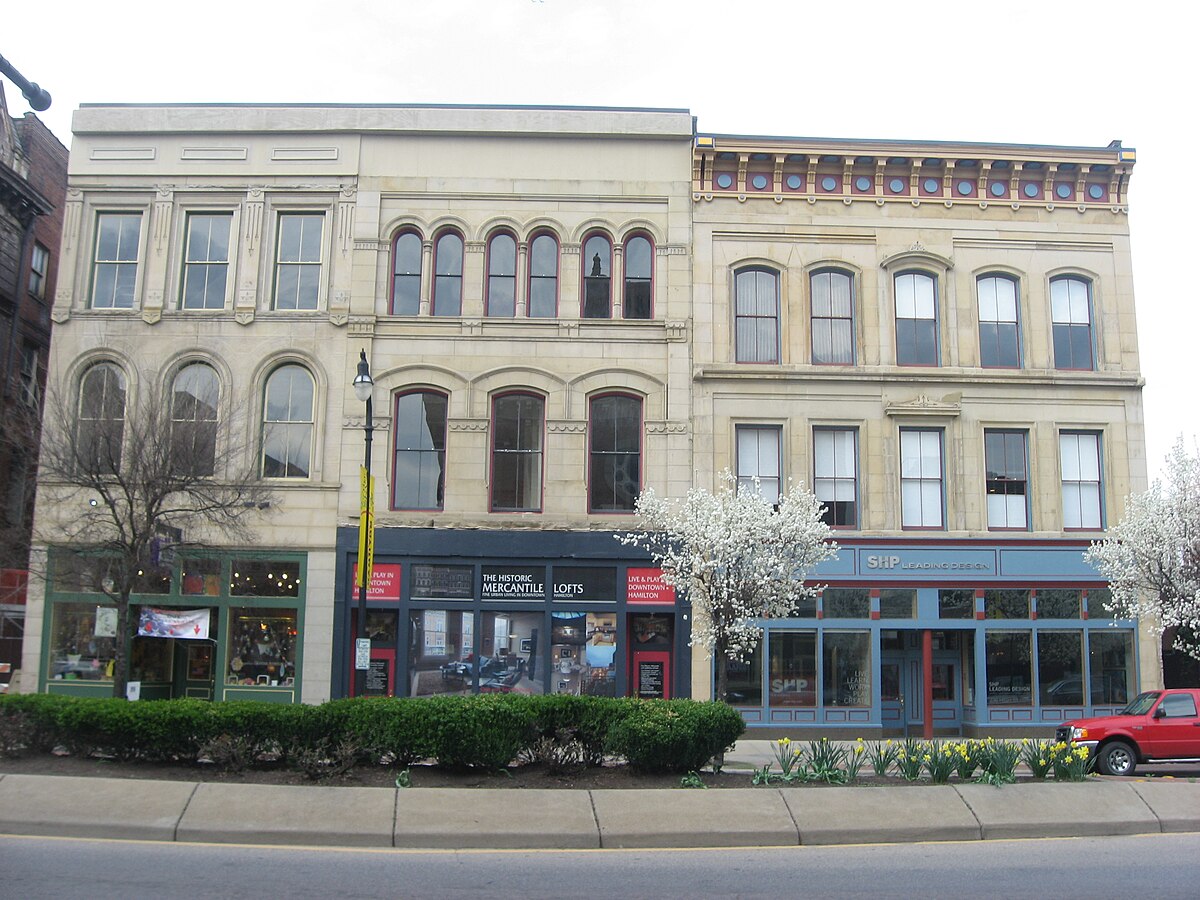
The High Street Commercial Block was recognized and listed on the National Register of Historic Places in 2004, later expanded in 2014 when additional buildings were documented as contributing to the historic district. At its core are three masonry structures dating from the 1870s, all exhibiting distinctive elements of the Italianate architectural style, which was widely popular in American commercial architecture in that period.
The buildings that compose the block — historically known as the old Second National Bank Building, the Howell-Sohngen Building, and the retail property once home to McCrory’s Variety Store — share common architectural language while also maintaining individual character. Their three-story facades reflect a robust era of craftsmanship, distinguished by arched windows, decorative cornices, and thoughtful masonry articulation. Arched windows on the upper stories create a rhythmic elevation that was both functional (providing light to interior offices and storefronts) and stylistic, signifying status and permanence in built form.
Italianate architecture in the United States emerged in the mid-19th century as a romantic interpretation of Italian Renaissance and rural Tuscan forms, adapted for urban American needs. In commercial buildings like those on High Street, Italianate features typically include tall, narrow windows capped with rounded arches, elaborate cornices with brackets at the roofline, and a vertical orientation that suggests sophistication and prosperity.
In the High Street Commercial Block, these elements are evident in subtle but meaningful variations from building to building. The leftmost and center structures have narrower bays with simpler fenestration patterns, while the rightmost building is wider and features larger, prominent arched windows that emphasize its presence within the block. Stone detailing, varied cornices, and bay divisions work together to create a streetscape that feels coherent yet visually engaging — a testament to the attention paid by builders and patrons to architectural distinction during Hamilton’s commercial boom.
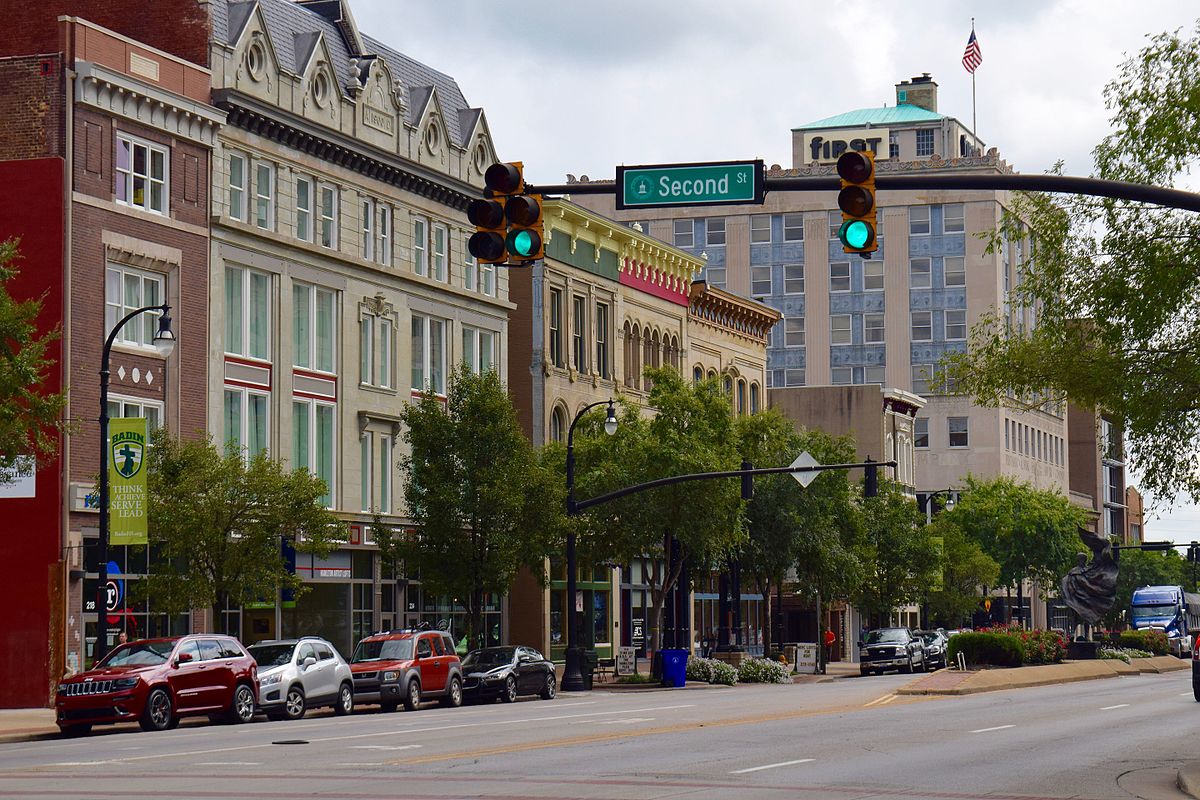
The High Street Commercial Block’s importance extends beyond architectural styling. Its designation as a historic district also reflects its role in the economic and social life of Hamilton. As the downtown hub of commerce, High Street was where residents and visitors alike conducted business, socialized, and accessed services in the decades before modern shopping malls and interstate highways. The block anchored this activity, housing financial institutions and retail enterprises that supported local growth.
For example, the Second National Bank Building was part of a broader network of institutions that facilitated capital flow for businesses and industries throughout the Miami Valley. Nearby commercial blocks, opera houses, and historic theaters also contributed to a thriving downtown culture where architecture and community life intersected.
In the 20th century, as economic patterns shifted and automobile travel began to redirect commercial development outward toward freeway access, downtown Hamilton — like many midwestern industrial cities — experienced periods of decline. Structures that were once considered cutting-edge commercial spaces faced vacancies, adaptive reuse challenges, and the risk of demolition. Yet, the High Street Commercial Block endured, symbolizing both the city’s heritage and the value of historic preservation.
Preservation efforts in Hamilton have increasingly focused on integrating historic resources into contemporary community life. Recognizing the architectural value of buildings like those on High Street has helped galvanize local and regional interest in revitalizing downtown. Architectural rehabilitation projects — including adaptive reuse for offices, residential lofts, and creative spaces — demonstrate how historic structures can remain viable in a 21st-century economic context. One example of this broader movement can be seen in efforts by local architects and developers who have reimagined historic blocks for modern use, combining respect for historic character with updated amenities that satisfy current market demands.
Such efforts align with Hamilton’s broader identity as a city that embraces its past while looking forward. The city’s Historic Walking Tours feature numerous downtown structures and districts, showcasing architectural diversity from Italianate commercial buildings to residential Victorian styles found in surrounding neighborhoods. These tours not only attract visitors interested in heritage tourism but also serve as educational tools for residents and stakeholders invested in community development.
The High Street Commercial Block in Hamilton, Ohio stands as a tangible reminder of a formative era in the city’s commercial history. Its Italianate facades, historical associations, and preservation as a historic district contribute to both the architectural richness of downtown and the collective memory of the community. As Hamilton continues to invest in urban revitalization, this small but significant block remains a testament to how historic buildings can serve as anchors for economic activity, cultural identity, and architectural appreciation.
